
User Experience Testing for Fintech Apps: Lessons from Razorpay, CRED, and PayPal


Modern fintech applications handle millions of transactions daily while maintaining seamless user experiences across digital payment platforms. With AI-driven financial services and evolving customer expectations, how do leading fintech companies like Razorpay, CRED, and PayPal ensure their apps deliver fast, secure, and intuitive user experiences?
This newsletter explores proven UX testing strategies that combine user research, performance validation, and continuous optimization to create exceptional fintech experiences. Let's discover the secrets behind successful fintech UX!
Fintech UX Testing Foundation: Built for Digital Excellence
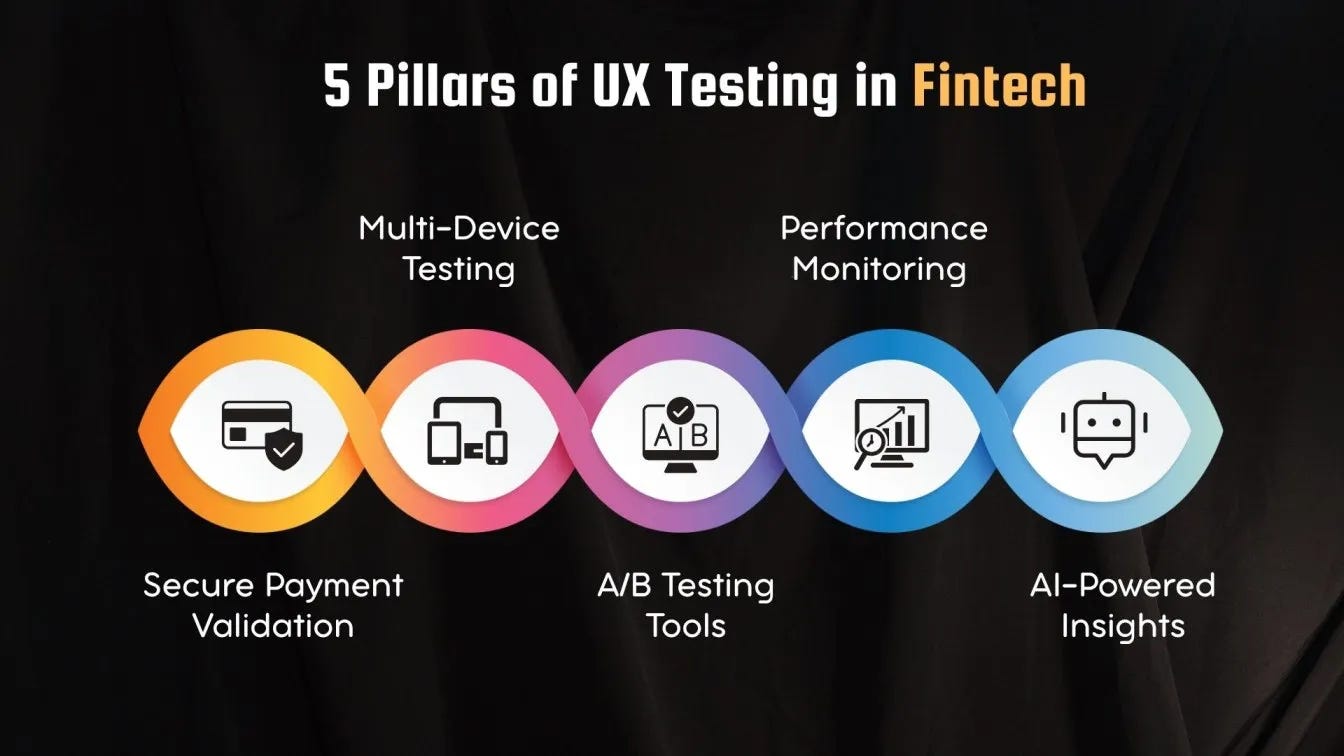
The fintech industry relies on sophisticated UX testing approaches that address unique challenges in financial services:
✅ User experience testing tools validating payment flows and transaction security
✅ Performance testing ensuring apps remain stable during peak usage periods
✅ A/B testing optimization for onboarding flows and feature adoption
✅ Cross-device compatibility testing for mobile and web platforms
Why UX Testing Drives Fintech Success
Effective UX testing ensures fintech applications deliver secure, fast, and user-friendly experiences that build customer trust and drive adoption. Poor user experiences in financial apps can lead to transaction abandonment, security concerns, and customer churn. Here's why UX testing is essential:
🔍 Transaction Security: Validates secure payment processes without compromising usability
🔍 Performance Optimization: Ensures apps load quickly and handle high transaction volumes
🔍 User Adoption: Improves onboarding flows and feature discovery through testing
🔍 Trust Building: Creates consistent, reliable experiences that encourage continued usage
Common Fintech UX Testing Challenges
1️⃣ Complex User Onboarding
Fintech apps must balance security requirements with user-friendly registration processes:
Identity Verification Complexity: KYC processes require multiple verification steps
Security vs. Simplicity: Multi-factor authentication can create friction for users
Regulatory Compliance: Legal requirements often add complexity to user flows
2️⃣ Cross-Platform Consistency
Users expect seamless experiences across mobile apps, web platforms, and different devices:
Device Compatibility: Ensuring consistent performance across smartphones, tablets, and desktops
Browser Variations: Testing payment flows across different web browsers and versions
Operating System Differences: Validating functionality on iOS, Android, and web platforms
3️⃣ Performance Under Load
Fintech apps must maintain speed and stability during high-traffic periods:
🎯 Peak Transaction Times: Apps must handle increased load during sales events and holidays
🎯 Real-Time Processing: Payment confirmations and transfers require immediate responses
🎯 Global Scale: International platforms must perform consistently across regions
Platform-Specific UX Excellence
Razorpay: Payment Gateway Optimization
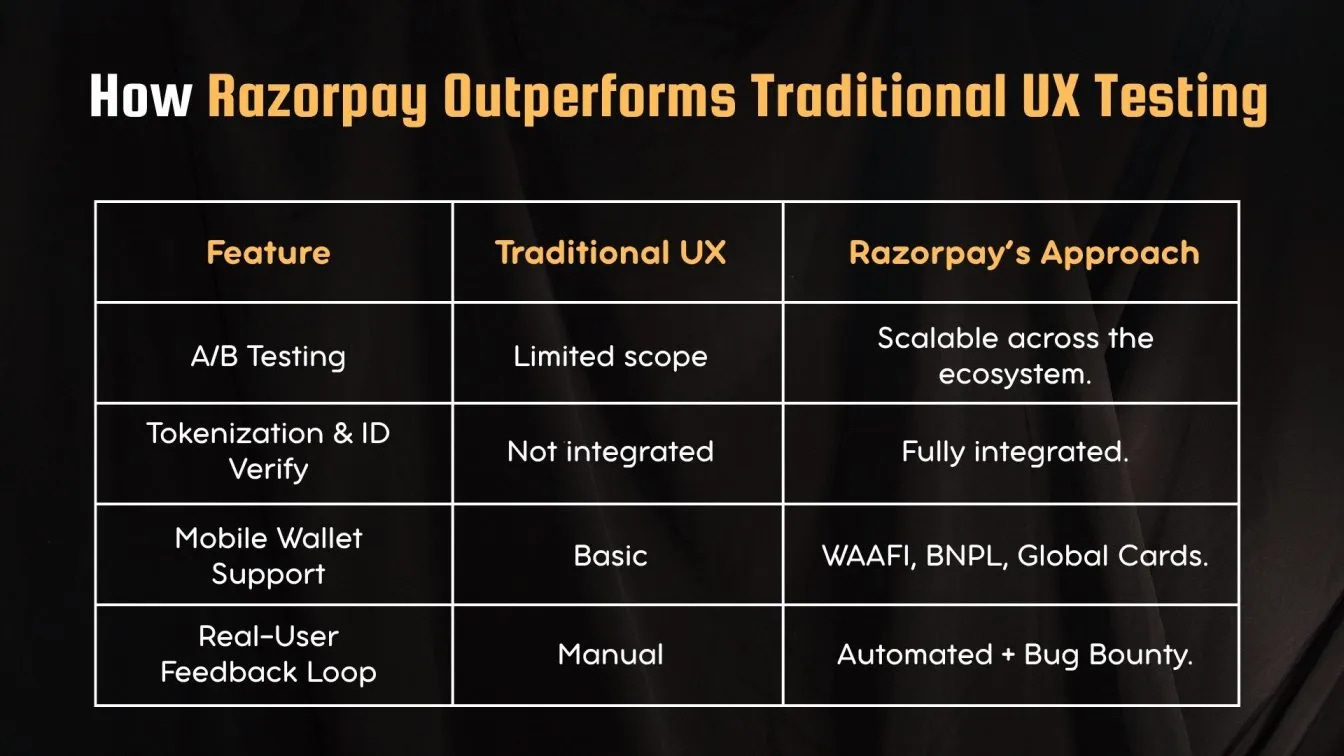
Razorpay focuses on streamlined payment processing with emphasis on developer and merchant experience:
🔥 API Integration Testing: Validates smooth integration for merchant platforms
🔥 Payment Flow Optimization: A/B tests different checkout processes for conversion rates
🔥 Security Testing: Ensures fraud prevention doesn't impact legitimate transactions
🔥 Multi-Payment Support: Tests various payment methods including cards, wallets, and UPI
CRED: Gamified Financial Experience
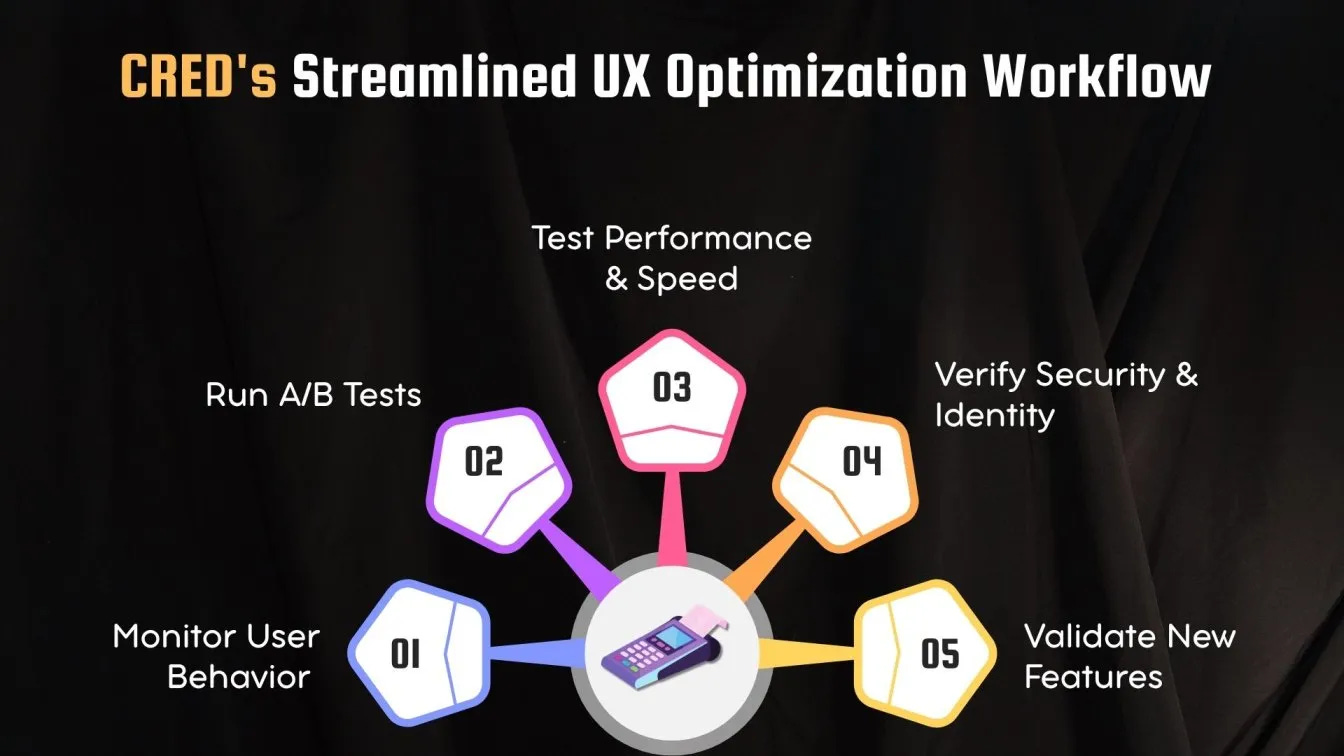
CRED combines credit management with engaging user interface design:
Reward System Testing: Validates gamification elements and user engagement features
Credit Score Integration: Tests seamless integration with credit monitoring services
Bill Payment Flows: Optimizes credit card payment processes for user convenience
Visual Design Validation: Ensures consistent branding and interface elements
PayPal: Global Payment Platform
PayPal manages complex international payment flows with focus on trust and reliability:
Cross-Border Testing: Validates currency conversion and international transfer processes
Multiple Product Integration: Tests PayPal Credit, PayPal Checkout, and peer-to-peer payments
Security Protocols: Ensures fraud protection systems work seamlessly with user experience
Merchant Integration: Validates smooth integration with e-commerce platforms globally
Performance Testing Excellence
Speed and Stability Validation
Performance testing ensures fintech apps maintain reliability during critical financial operations:
📊 Load Testing: Simulates high user volumes during peak transaction periods
📊 Stress Testing: Identifies breaking points and system limitations
📊 UI Responsiveness: Validates interface speed and interaction smoothness
📊 Transaction Processing: Measures payment completion times and success rates
Testing Tools and Frameworks
JMeter Performance Testing: Load testing for web applications and APIs
k6 Performance Testing: Modern load testing for developer-centric workflows
Application Performance Testing: End-to-end validation of user journeys
Website Performance Testing: Page load speed and resource optimization
User Research and Validation
A/B Testing Strategies
Fintech companies use data-driven testing to optimize user experiences:
Onboarding Flow Testing: Compares different registration and verification processes
Feature Placement: Tests optimal positioning of buttons, forms, and navigation elements
Content Optimization: Validates messaging, explanations, and help text effectiveness
Conversion Rate Testing: Measures impact of design changes on transaction completion
User Acceptance Testing
Real User Scenarios: Tests actual financial tasks and workflows
Accessibility Validation: Ensures apps work for users with disabilities
Usability Studies: Observes user behavior and identifies pain points
Feedback Integration: Incorporates user suggestions into design improvements
Security and Trust Testing
Balancing Security with Usability
Fintech apps must implement strong security measures without creating user friction:
✅ Authentication Testing: Validates login processes and security verifications
✅ Fraud Prevention: Tests detection systems without blocking legitimate users
✅ Data Protection: Ensures secure handling of sensitive financial information
✅ Error Handling: Provides clear communication when security measures activate
Trust Building Elements
✅ Transparency Testing: Validates clear communication of fees, processes, and policies
✅ Status Communication: Tests real-time updates for transaction processing
✅ Support Integration: Ensures easy access to customer service and help resources
✅ Regulatory Compliance: Validates adherence to financial regulations and standards
Mobile-First Testing Approach
Mobile Wallet Integration
Touch Interface Optimization: Tests gesture controls and touch responsiveness
Biometric Authentication: Validates fingerprint and face recognition integration
Offline Capability: Tests limited functionality when internet connectivity is poor
Battery Optimization: Ensures app efficiency doesn't drain device battery quickly
Cross-Device Synchronization
Account Sync Testing: Validates data consistency across multiple devices
Session Management: Tests secure session handling and automatic logout features
Notification Systems: Ensures push notifications work reliably across platforms
Update Management: Tests seamless app updates without disrupting user sessions

Key UX Testing Takeaways
🎯 User-Centered Approach: Design testing around actual user needs and financial behaviors
🎯 Continuous Optimization: Implement ongoing testing and iteration cycles
🎯 Security Integration: Balance strong security with smooth user experiences
🎯 Performance Priority: Maintain speed and reliability during all testing phases
Final Thoughts
Successful fintech UX testing requires balancing multiple priorities: security, speed, usability, and regulatory compliance. Leading platforms like Razorpay, CRED, and PayPal demonstrate that effective testing strategies combine automated performance validation with user-centered design research.
The future of fintech UX testing lies in AI-driven personalization, real-time user feedback integration, and adaptive interfaces that learn from user behavior. Organizations that invest in sophisticated UX testing frameworks will create more engaging, trustworthy, and successful financial applications.
📌 Ready to elevate your fintech UX testing strategy? Focus on user research, performance optimization, and security integration to create exceptional financial experiences.